A Mouse Is a Bad Surprise: The Holiday Gift That Needs a Receipt

Photo: Peter Merholz from Berkeley, CA, United States, CC BY-SA 2.0, via Wikimedia Commons
Every November, someone in your life mentions that they work from home, and a gift idea switches on: a mouse. It is practical. It is affordable. It has a clear job. It also happens to be one of the most personal pieces of office equipment a person can own. A mouse is not a mug. You cannot pick one because the color is nice and the reviews are good.
That is the holiday mouse mistake. A well-meaning present can become the thing someone uses every day for months, even though it is slightly too small, slightly too heavy, or slightly wrong in a way they cannot quite name. The discomfort does not arrive with fireworks. It arrives as a little extra reach for a side button, a scroll wheel that feels like work, or a grip that never quite settles.
The Problem With Buying From a Best-Of List
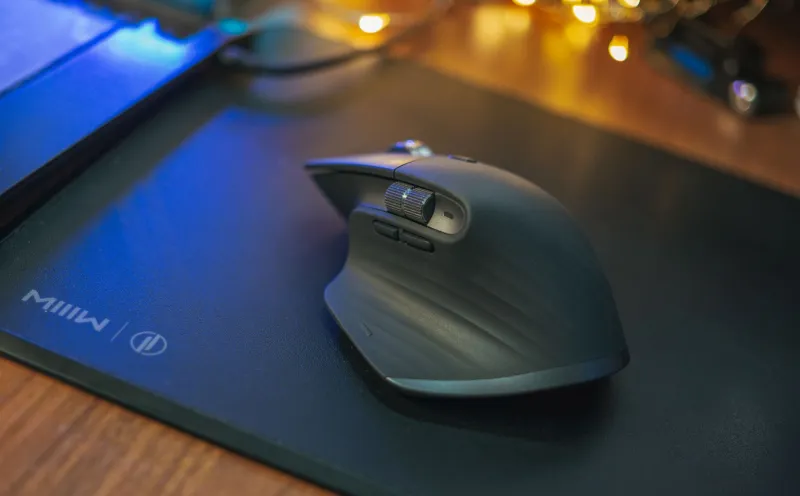
Mouse reviews are useful, but they are written for a crowd. Your friend is not a crowd. Hand length and width vary. So does grip style: some people palm the whole mouse, some claw it, and some steer with their fingertips like they are conducting a tiny orchestra. Button placement, weight, scroll resistance, and even click sound all change how a mouse feels after hour six.
A $100 mouse can be wrong for a person. A $25 mouse can be right. The difference is not prestige. It is fit. And fit is hard to wrap in holiday paper.
What Makes a Mouse Personal
A mouse has to match the hand and the desk, not just the operating system. The big variables are usually obvious once you list them:
- Hand size and whether the person prefers a compact mouse or a fuller palm fill
- Grip style, which affects height, length, and where the thumb rests
- Side buttons, because extra buttons are only useful if the thumb can reach them without shifting the whole hand
- Scroll wheel feel, since a stiff wheel can turn a simple task into a repeated annoyance
- Weight, especially for people who move the mouse with their fingers rather than their arm
- Desk surface and space, because a mouse that needs a huge sweep may not suit a small apartment desk
- Quiet versus tactile clicks, which matters more in shared spaces and late-night work
- Any existing wrist, hand, or shoulder sensitivity, which is exactly the area where a surprise gift should not play doctor
None of that shows up on a product page in a way that tells you whether it will suit one specific remote worker. That is why the safest mouse gift is not really the mouse. It is the option to return it.
The Receipt Is the Real Gift
If you are going to buy a mouse for someone, buy it from a retailer with a clear return window and include a gift receipt. Leave the packaging intact. Do not peel off tags, engrave the shell, or open software that cannot be returned. In the US, holiday return policies vary by store and by purchase date, so check the fine print before you wrap anything. A generous return policy is a feature, not an afterthought.
The gift receipt does something important: it removes the social guilt. A mismatched mouse is not just a bad object. It is an obligation. People keep gifts. They feel strange saying, 'This makes my hand feel weird.' A receipt gives them permission to choose a better fit without making the gift feel like a failure.
A Better Present: The Mouse Test Drive
If you want to be genuinely helpful, consider giving a mouse test-drive coupon instead of a specific model. It can be a handwritten card, a shared note, or a simple promise: 'Good for one mouse shopping trip. We order two candidates. You keep the one that fits. I handle the returns.'
That sounds less exciting than a wrapped box, but it is more useful. It turns a guessing game into a tryout. It also works well for remote workers who already have opinions about buttons, weight, and scroll wheels. The recipient gets the fun of choosing without the awkwardness of returning your present.
If you live near a store with display models, a test-drive coupon can include an hour of hands-on browsing. If not, order from a retailer with easy returns and let the recipient compare at their own desk, where the mouse actually has to live.
A Short Checklist Before You Buy a Mouse as a Gift
- Ask a casual question first: 'How is your mouse treating you?' You may learn more than any review can tell you.
- Confirm the return window and ask for a gift receipt at checkout.
- Avoid final-sale mice, engraved mice, and anything that cannot go back in the box.
- Include a note that says, 'No pressure. Return it if it does not fit your hand.'
- Consider a test-drive coupon, a mouse fund contribution, or a desk accessory that does not depend on hand size.
- Do not diagnose wrist pain with a gift. If someone is already uncomfortable, encourage them to see a professional rather than assigning them a new mouse.
- If you buy a specific model, choose one the person has actually mentioned wanting. Enthusiasm beats surprise in this category.
When a Mouse Gift Actually Works
There are good exceptions. If the recipient asked for a specific model, replacing an identical older mouse is usually safe. If they explicitly want to experiment and you are funding the experiment, that works too. The trouble starts when a mouse is a surprise replacement for a tool the person already chose for themselves.
A mouse is a small object with a long daily relationship. That is why it deserves more care than a novelty gift. If you wrap one this holiday season, wrap the receipt too. The kindest version of the present is not a mouse that looks right in the box. It is a mouse the person can actually live with at their desk in 2026.